
What Is Colour Therapy? How Chromotherapy Works and What to Expect
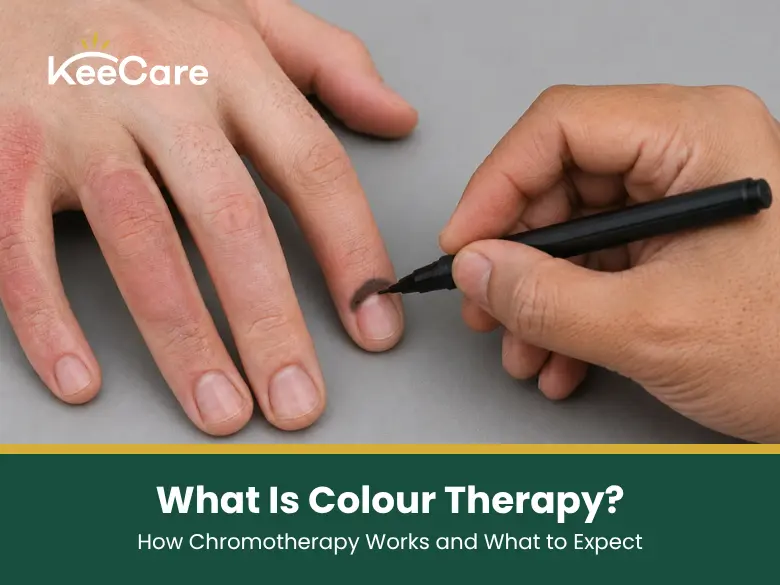
Home What Is Colour Therapy? How Chromotherapy Works and What to Expect ByRavinder Singh Sahota September 28, 2026 Colour therapy, sometimes referred to as chromotherapy, is a complementary wellbeing practice that uses colour within different traditional and therapeutic frameworks. Practitioners may associate colours with different emotional, energetic or wellbeing qualities. Different colours of visible light correspond to different energy. Within colour therapy traditions, colours are also assigned different symbolic or wellbeing associations, although these therapeutic associations are not established medical effects. At KeeCare in Upper Norwood, London, colour therapy is delivered using a distinctive approach that sets it apart from light-based chromotherapy. Washable, non-toxic water-based sketch pens are used to apply specific colours directly to points on the body, a distinctive method used by KeeCare’s practitioner since 2020. Whether you are new to colour therapy or simply curious about what a session involves, this guide explains the principles behind it, what to expect and how the KeeCare approach works. Key Takeaways Practice influenced by longstanding traditions. Colour has held symbolic and wellbeing-related significance across several historical traditions, including Chinese and Ayurvedic systems. Modern colour therapy builds on these foundations with structured frameworks for applying colour therapeutically. Colour as energy. Sunlight carries energy, which warms up the Earth and is the driving force behind all our weather and climate. Sunlight is a basic need of life. All living beings need it to survive. Light can be broken down into colours, which indicates that colour is also a basic need of life. The use of colour to promote healing and wellness is also called Chroma-therapy where researchers study how light enters body, whether through the eyes or skin, and determines what effects it has on our brain and our body as a whole.Colour can also enter the body through skin. The energy from the colour is transferred to the specific organs where the energy is needed. Within colour therapy traditions, each colour is understood to carry a distinct vibrational quality that may influence the mind and body in different ways. KeeCare’s approach is distinctive. At KeeCare, colour therapy involves applying colour directly to specific body points using washable, water-based sketch pens, a method introduced to the UK by KeeCare’s practitioner in 2020. Needle-free and non-invasive. Colour therapy at KeeCare does not involve needles. It may be of particular interest to clients who prefer to avoid needles but still wish to work with body energy points. Personalised to the individual. The colours and body points used in a session are selected based on the client’s individual concerns and the practitioner’s assessment, rather than following a fixed protocol. Explored for emotional and physical wellbeing. Some clients explore colour therapy as a complementary support for back pain or any joint pain, headache/migraine, lungs wellbeing, Heart & circulation wellbeing, liver wellbeing, men & women’s wellbeing, fertility & conception support, eyes & ears health, Kidney & urinary bladder health, skin wellbeing, stress/anxiety, emotional balance, Digestive discomfort & constipation, and general vitality. Complementary, not a replacement. Colour therapy is designed to complement conventional medical care, not replace it. Always continue with any treatment your doctor has recommended. No GP referral needed. You can book a colour therapy consultation at KeeCare without a referral from your GP. What Is Colour Therapy? Colour therapy is a complementary practice based on the understanding that colour, as a form of visible light, carries energy. Different colours correspond to different energy within the visible spectrum. Colour can enter the body through the skin. The energy from the colour is transferred to the specific organs where the energy is needed. The use of colour in healing has ancient roots. References to the therapeutic use of colour appear in Egyptian, Greek, Chinese and Ayurvedic traditions. Modern colour therapy developed through a variety of approaches that used colour, coloured light and symbolic colour associations within complementary practice. Today, colour therapy is used in a range of complementary therapy settings. Approaches vary: some practitioners use coloured lights or filtered lamps, while others apply colour directly to the body. The colours are applied at a specific energy point and they penetrate skin to alter the Energy Point underneath thus providing the appropriate healing to the ailment. Once administered, the person can continue with his/her daily chores. The treatment is carried out using sketch pens that are easily available in the market. Colours administered are to be retained on hand for a minimum of 6 to 8 hours a day until full relief from disease. And when there are no symptoms, the treatment continues for one more week and then the treatment can be stopped. If colours are washed off, one could reapply the colour. Each time the old colours need to be completely washed off and then the new colours are to be applied. The best results are experienced when applied in the presence of sunlight, however it provides satisfactory results even when applied under electric light. Colours emit light of a certain frequency/wavelength, and a particular light penetrates skin and directly affects the Energy points underneath. Wondering whether colour therapy might be a good fit for what you are looking for? Contact our team to discuss your concerns and book a free initial consultation. Get Started What Is Chromotherapy and How Does It Differ from Colour Therapy? Chromotherapy and colour therapy are terms that are often used interchangeably, although some practitioners distinguish between them. Chromotherapy typically refers to the use of coloured light applied through filters or lamps. Colour therapy is sometimes used as a broader term covering light-based methods alongside other approaches, such as applying colour to the body or using colour in visualisation and environmental design. In practice, the two terms overlap, and the method used will depend on the practitioner and the tradition they draw on. Both approaches use colour within complementary wellbeing frameworks, although their methods and underlying theories can differ. The KeeCare approach falls within the broader definition of colour therapy. Rather than using coloured light, the practitioner applies colour directly
What Is Auricular Acupuncture? How Ear Acupuncture Works and What to Expect
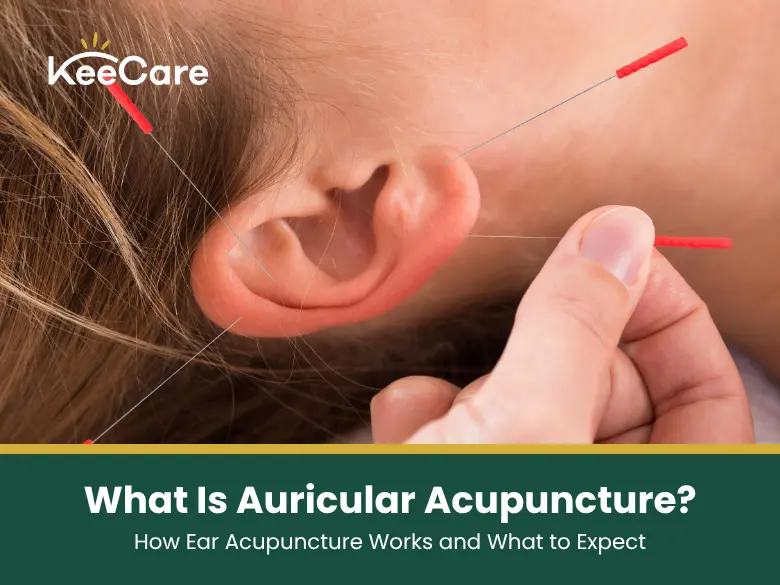
Home What Is Auricular Acupuncture? How Ear Acupuncture Works and What to Expect Auricular acupuncture is a complementary therapy that involves stimulating specific points on the outer ear, usually with fine needles, semi-permanent needles or ear seeds. It is based on the auricular microsystem model, in which different areas of the outer ear are mapped to different parts of the body. Stimulating ear points may support balance in corresponding areas. At KeeCare in Upper Norwood, London, auricular acupuncture is delivered by The Acupuncture Society and CNHC-registered practitioner who draws on Chinese, Ayurvedic and French methods to create a personalised approach for each client. Whether you are managing persistent pain, exploring support for stress or simply curious about what ear acupuncture involves, this guide explains how it works, what a session looks like and what you can Key Takeaways The ear as a microsystem. Auricular acupuncture is based on the understanding that the outer ear contains reflex points corresponding to different areas of the body, making it a self-contained system for supporting overall wellbeing. Multiple traditions, one approach. Auricular acupuncture can draw on Traditional Chinese Medicine, Ayurvedic and French approaches, alongside protocols such as Battlefield Acupuncture. Each offers a slightly different framework for assessing and treating the ear. Different tools, same principles. Ear points can be stimulated using fine acupuncture needles, ASP semi-permanent needles or ear seeds, depending on the client’s needs and preferences. Studied for pain and stress. Auricular acupuncture has been studied for its potential to support pain management and stress reduction and is used in some clinical settings, including military and hospital environments. No GP referral is needed. You can book a consultation at KeeCare without a referral from your GP, although you should continue to follow any existing medical advice from your healthcare team. Sessions are relatively short. A typical auricular acupuncture session is relatively brief, with needles or ear seeds placed with minimal discomfort for many people. Results may build over time. Some clients find that a course of sessions provides more noticeable support than a single treatment, particularly for chronic or long-standing concerns. Complementary, not a replacement. Auricular acupuncture is designed to complement conventional medical care, not replace it. Always continue with any treatment your doctor has recommended. What Is Auricular Acupuncture? Traditional Chinese body acupuncture has a long history dating back more than 3000 years. The acupuncture points around the ears belong to the major body acupuncture channels or meridians. Auricular acupuncture focuses entirely on the outer ear. Rather than inserting needles across the body, the practitioner works with a set of reflex points located on the external ear, each understood within auricular acupuncture systems to correspond to a specific organ, body part or physiological function. The concept draws on the idea of a microsystem, where one small area of the body, in this case the ear, mirrors the whole. Modern Auricular Therapy is not, by its very definition, either traditional or Chinese. The use of the ear as Microsystem for the treatment of Bodily disharmony only became a primary treatment methodology in the 1950s after the discoveries of Dr Paul Nogier in Lyon, France. Through decades of investigation, Dr Paul Nogier was able to map the reflex points on the auricle which resembles fetus. Now, Auricular acupuncture is being further developed using western and eastern medicine concepts. Today, auricular acupuncture is used in complementary therapy practice and has also been studied and used in selected clinical and military settings. Its popularity has grown in part because it is compact, relatively quick to perform and does not require the client to undress or recline on a treatment table for an extended period. Wondering whether auricular acupuncture might be right for you?Get in touch with our practitioner to talk about your concerns and book a free initial consultation. Get Started How Does Auricular Acupuncture Actually Work? Auricular Therapy or Auricular Acupuncture is a physical reflex therapy that can detect physical (somatic), physiological and psycho emotional disturbances in the body which are then projected onto the external auricle. The treatment of ear points will then stimulate the brain which in turn will alleviate physical, physiological or psycho-emotional problems in the body. The rich network of nerve innervations allows energetic organ information to be conveyed through the nervous system between the corresponding parts of the brain and specific anatomical area of body. For Auricular treatment, the Auricular Acupuncture points on external ear are stimulated using various modalities e.g. Needles, Seeds etc. Sterile, single use, stainless, disposable acupuncture needles are used. The Ear seeds (also known as Vaccaria seeds) are non-invasive pressure seeds. These seeds are held in place on the ear with a small piece of adhesive tape. What Are the Main Ear Acupuncture Points? The ear contains dozens of recognised acupuncture points, and different auricular acupuncture systems map numerous points across the outer ear. The specific points selected vary according to the practitioner, the system being used and the client’s individual concerns. The following are among the points commonly referenced in auricular acupuncture: Shenmen (Spirit Gate). One of the most widely used auricular points, associated with calming the nervous system and supporting relaxation. Point Zero. Described within some auricular acupuncture systems as a point associated with balance or homeostasis. Sympathetic point. Associated with the autonomic nervous system and used to support relaxation of the body’s stress response. Thalamus point. Often included in pain management protocols. Kidney point. Used in protocols relating to energy, vitality and urinary health. Lung point. Included in smoking cessation and respiratory wellbeing protocols. Master Omega point. Associated with emotional regulation and stress. And many more points are used for each individual case according to diagnosis. The specific points used in any given session will depend on the client’s concerns and the practitioner’s assessment. The KeeCare approach to auricular acupuncture in London integrates Chinese, Ayurvedic and French methods alongside Battlefield Acupuncture, allowing the practitioner to consider each client’s needs from multiple perspectives. Curious which ear points might be relevant to what you